
A small crack, loose patch, or water stain in a vermiculite coating can be easy to ignore, especially when the rest of the surface still looks sound. But once damage starts, it’s worth finding out what caused it and how far it extends.
You might be dealing with a localised patch that can be repaired fairly easily. Or the coating may have lost adhesion across a wider area and need more extensive respraying. If the vermiculite forms part of a fire-rate coating system, you also need to know whether the damage has affected the specified coverage.
But damaged vermiculite doesn’t always mean starting again. With the right assessment, sound sections can often remain in place while damaged areas are repaired or resprayed.
Why vermiculite coatings need to stay in good condition
Spray-applied vermiculite is used in several types of building application. You’ll find it on ceilings, but vermiculite-based fire-protection products can also be applied to steel and concrete structures, roof and floor decks, and ventilation ductwork.
The purpose of the coating changes what you need to consider when it becomes damaged.
On a textured ceiling, cracking, staining, or sections falling away can leave an unsightly and increasingly difficult surface to maintain. Where vermiculite is part of a specified fire-protection system, damage needs closer attention because the coating has been applied for a particular performance requirement.
That’s why a repair shouldn’t begin with a tin of paint or a quick patch over whatever is already there. You first need to understand what’s damaged, whether the surrounding coating is still sound, and what the original application was intended to do.
Signs your vermiculite coating needs attention
Vermiculite damage isn’t always a large section hanging from the ceiling. Smaller changes can give you an earlier warning that the coating needs to be checked.
Look for:
- visible cracks or splits in the coating;
- loose, flaking, or poorly adhered sections;
- patches where the vermiculite has fallen away;
- staining following a roof, pipe, or plumbing leak;
- impact damage around plant, services, access points, or recent building work;
- exposed substrate where the coating was previously continuous; and
- old repairs that are cracking, separating, or no longer blending with the surrounding surface.
You’ll also want to work out why the damage occurred. If water ingress caused the problem, for example, repairing the vermiculite before fixing the leak won’t get you very far.
The same applies after fit-out, electrical, mechanical, or other building works. A coating can be knocked, scraped, cut away, or disturbed while people are gaining access to services above ceilings or around structural elements.
Cracks and localised damage can often be repaired
Not every damaged vermiculite coating needs to be stripped back and completely replaced.
Where the problem is confined to a smaller area and the surrounding material remains sound, a localised repair may be possible. Loose material needs to be dealt with first to prevent the new application from being attached to an unstable edge.
The repair method will depend on the existing material and the extent of the damage. Small areas may be treated differently from larger sections that are better suited to spray application.
This is particularly important with fire-protection applications. Vermiculite-based fire sprays are manufactured as specific systems for particular substrates and applications, so a repair needs to take the existing coating and project requirements into account rather than assuming any vermiculite product will do the same job.
If you’re dealing with an existing ceiling, Stywill Texture Coating provides vermiculite ceiling repair, including patching and respraying damaged areas.
Water damage needs to be dealt with at the source
A leak above a vermiculite ceiling can leave staining as the first obvious sign that something’s wrong. Depending on the extent of the water exposure, you may also see the material soften, sag, lose adhesion, or fall away.
The leak comes first.
There’s little value in repairing the finish while water is still entering the area. Once the source has been found and repaired, the affected vermiculite can be inspected to see what remains securely attached and what needs to come out.
An inspection can also tell you whether you’re looking at one isolated patch or deterioration extending beyond the most visible stain.
Painting over water damage isn’t a substitute for repairing it. It can hide the symptoms while leaving loose or compromised material underneath.
When vermiculite respraying makes more sense
Patching works well when the damage really is localised. It becomes less practical when large sections have deteriorated or fallen away, when the edges around the damaged area aren’t sound, or when there have already been several unsuccessful repairs.
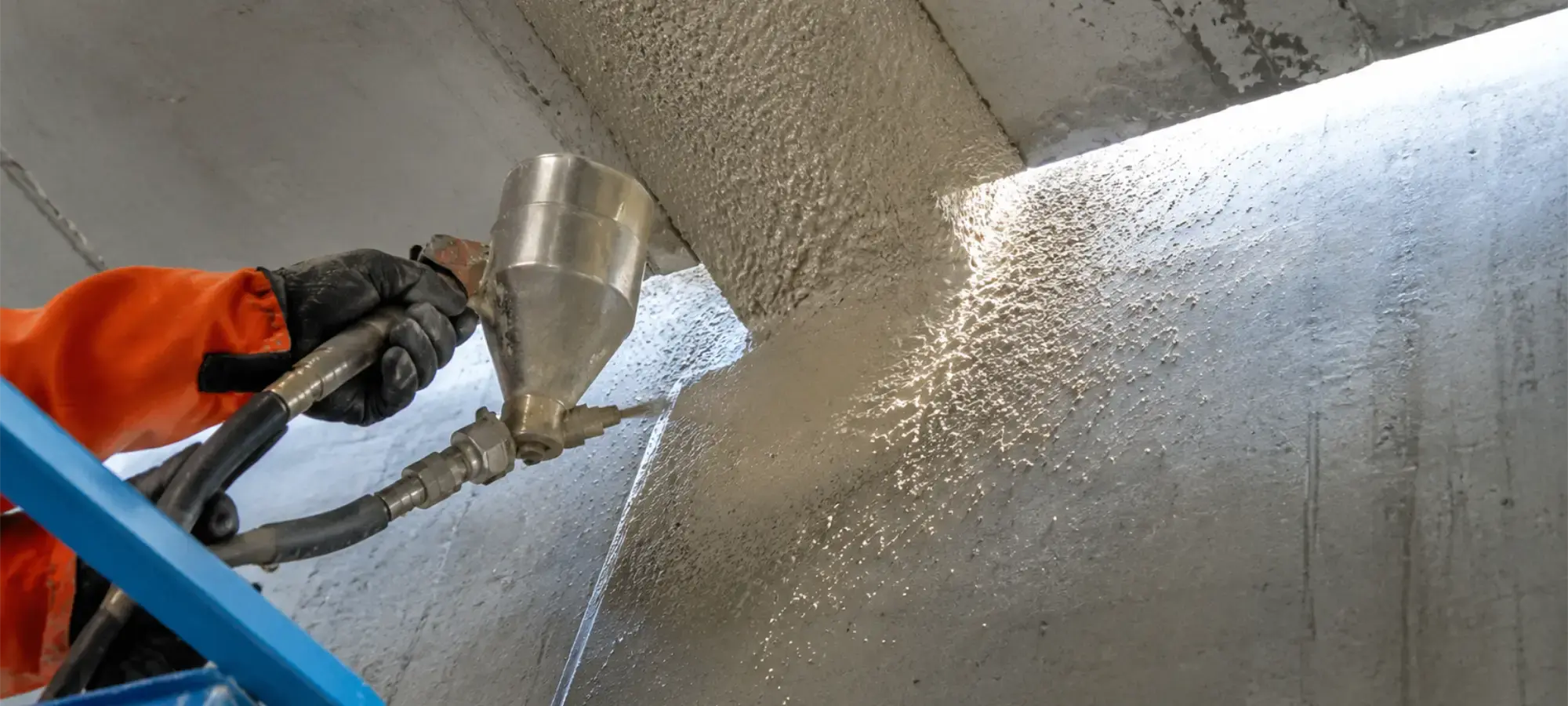
At that point, respraying a wider section may give you a better and more consistent result.
Stywill has carried out vermiculite respraying on commercial projects where sections of the existing ceiling coating have completely fallen out. The amount that needs to be reinstated will depend on what remains firmly bonded once the damaged area has been assessed.
You shouldn’t assume a whole ceiling needs replacing simply because one section has failed. Equally, repeatedly patching an area with widespread adhesion problems can turn a larger repair into a series of temporary fixes.
Check vermiculite after other building work
Some coating damage has little to do with the age of the vermiculite itself.
Building services change. New cables are installed. Mechanical equipment is replaced. Contractors need access above ceilings and around beams, columns, soffits, and other coated areas.
If your building has vermiculite in these locations, it’s worth checking the surrounding coating once the work is finished.
Pay particular attention after:
- electrical or mechanical service installations;
- refurbishment and fit-out work;
- plumbing leaks or other water ingress;
- work around coated structural steel; and
- any project where the coating has been cut, knocked, scraped, or removed for access.
Catching a small, damaged section at this stage can make the next step much simpler.
Be careful with older, unidentified vermiculite coatings
An older vermiculite coating shouldn’t automatically be assumed to contain asbestos, but it shouldn’t automatically be assumed asbestos-free either.
The Australian Government’s Asbestos Product Guide notes that asbestos wasn’t intentionally added to these coatings, but some historical vermiculite ore was naturally contaminated at its source.
If you have an older or unidentified sprayed vermiculite coating, don’t disturb it simply to find out what’s underneath. Arrange appropriate testing or asbestos advice before repair work that could disturb the material.
A good repair starts with understanding what’s already there
Two damaged vermiculite ceilings can look similar and still need different repairs.
The condition of the remaining coating, substrate, cause of the damage, size of the affected area, access, and original purpose of the vermiculite all need to be considered. For fire-rate coating on structural steel, the original system and required coverage also need to guide the repair.
Stywill Texture Coating has been applying and patching vermiculite ceilings for more than 25 years, including work in schools and industrial units. We also apply vermiculite fire-rate coating to suitable steel framework structures.
If you’re looking at cracking, water damage, missing sections, or a coating that no longer appears firmly attached, book a site assessment. We can check the existing surface and determine whether patch repair, respraying, or more extensive remedial work is the better next step.
FAQs about vermiculite coating maintenance and repair
Can cracked vermiculite coating be repaired?
Yes, localised cracks and damaged areas can often be repaired if the surrounding coating remains sound. The area should be inspected first because cracking can sometimes be a symptom of a wider adhesion or moisture problem. For a fire-rate coating, the repair also needs to be appropriate for the existing system and required coverage.
Can you repair vermiculite that has fallen off a ceiling?
In many cases, yes. Stywill carries out vermiculite ceiling repair and respraying, including projects where sections of the existing material have completely fallen away. Whether you need a local patch or a larger respray depends on how much material has failed and the condition of the coating around it.
What causes vermiculite coatings to deteriorate?
Common causes include water ingress, physical impact, loss of adhesion, and damage during maintenance, refurbishment, or building-services work. Finding the cause is an important part of the repair. If a leak or another source of damage is still present, repairing the coating alone is unlikely to solve the problem.
Should water-damaged vermiculite be replaced?
Not necessarily. Once the leak has been fixed and the area is dry, the coating can be inspected to determine what remains sound. A smaller affected area may only need local repair, while loose, sagging, or extensively damaged material may need to be removed and resprayed.
Does old vermiculite coating contain asbestos?
Not all older vermiculite contains asbestos. However, some historical vermiculite was naturally contaminated with asbestos at the mine where it was sourced. If an old, sprayed coating hasn’t been identified, it should be tested before work that could disturb the material.
How do you know whether vermiculite needs patching or respraying?
The decision comes down to the size and condition of the damaged area. A small defect surrounded by firmly bonded material may suit patch repair. Where larger sections have fallen away, adhesion is poor across a wider area, or previous patches have failed, respraying may be the more appropriate option.